
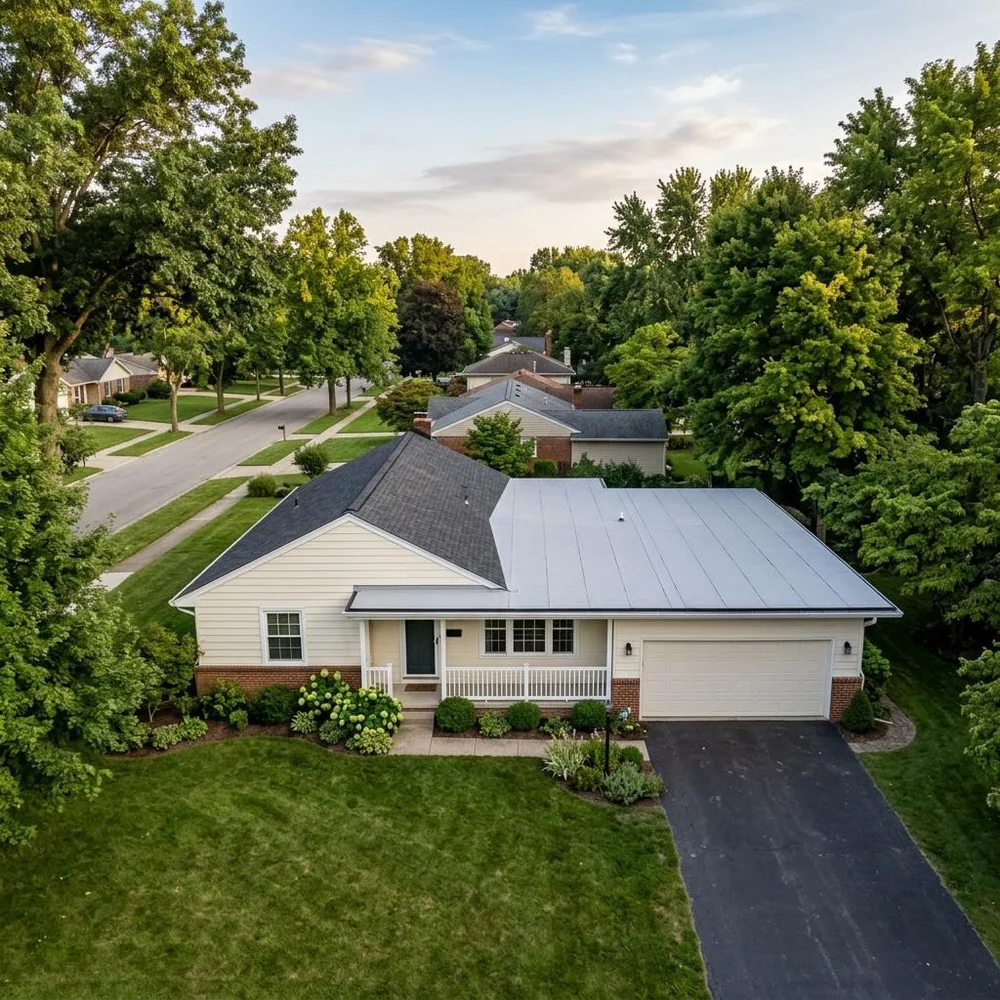
Additions · Garages · Porches · Low-Slope Sections
Residential Flat Roofing for Midwest Homes
Low-slope roofs on additions, garages, and porches need a different approach than the shingled roof on the rest of your home. We inspect the roof, find what is causing the problem, and explain your repair or replacement options in a written estimate.
A Quality Job at A Fair Price
Low-Slope Roofs on Homes
Where Homeowners Find Flat Roofs
Most homes with a flat or low-slope roof have it on just one part of the house. That section often meets walls, siding, and shingles, and those connections matter as much as the membrane itself.


Home Additions
Sunrooms, family-room bump-outs, and rear additions are often built with a low-slope roof that meets the main house at a wall or eave.
Attached & Detached Garages
Many garages carry a flat or nearly flat roof that collects debris and holds water when drainage is not maintained.
Porches & Entry Roofs
Covered porches and entry canopies are small, but their wall connections and edges are common leak points.
Dormers & Rear Sections
Shed dormers and rear kitchen sections sometimes have pitches too low for shingles to shed water reliably.
Why Not Shingles?
Asphalt shingles shed water by gravity and are not intended for roofs below the manufacturer's minimum slope. On a flat or very low-slope section, shingles can let water back up under the laps. These areas generally call for a continuous membrane system instead. We confirm the actual slope on site.
Honest Recommendations
Flat Roof Repair vs. Replacement
Not every leak means a new roof. These are common signs we look at, but the recommendation always comes from what the inspection shows.
A Repair May Make Sense When
- Leak traced to a single seam, puncture, or flashing detail
- Membrane is otherwise intact and still bonded
- Insulation and roof deck below are dry and sound
- Problem is a failed sealant or loose edge metal
Replacement May Be Better When
- Repeated leaks in different areas
- Widespread blistering, cracking, or shrinkage
- Wet insulation or soft, deteriorated decking
- Low spots that hold water and cannot be corrected with a patch
Drainage, Walls & Tie-Ins
Where Residential Flat Roofs Usually Fail
Drainage
A low-slope roof still needs to move water. We look at ponding, edge metal, gutters, scuppers, and whether tapered insulation or slope correction should be part of the scope.
Roof-to-Wall Transitions
Where an addition or porch roof meets siding or brick, the membrane has to turn up the wall and be properly flashed and counter-flashed. This is one of the most common sources of residential flat-roof leaks.
Tie-Ins with Pitched Roofing
When a low-slope section meets a shingled roof, the transition between the two systems must be detailed so water from the steeper roof is carried over, not under, the membrane.
Penetrations & Edges
Vent pipes, exhaust fans, skylights, and drip edges each need their own flashing detail appropriate to the membrane being installed.
Selected After Inspection
TPO, Modified Bitumen & EPDM for Homes
Each membrane can be a good fit on the right roof. Which one we recommend depends on your slope, drainage, wall and shingle connections, access, and the existing roof. Photos below show the membrane materials and may be from commercial installations.
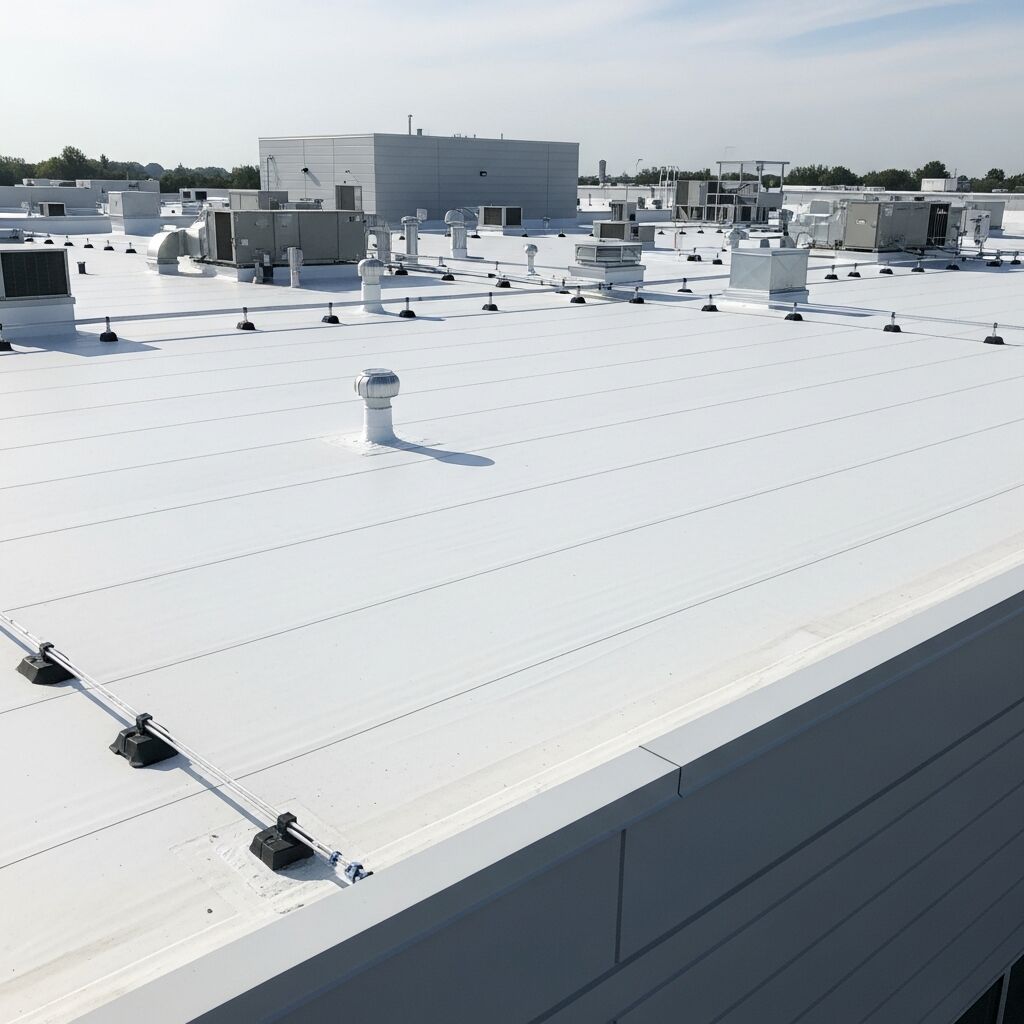
TPO
Thermoplastic Polyolefin
A single-ply membrane with heat-welded seams and a light, reflective surface. Often considered for addition and garage roofs where heat reflection matters.
- Heat-welded seams
- Light, reflective surface
- Lightweight single-ply sheet
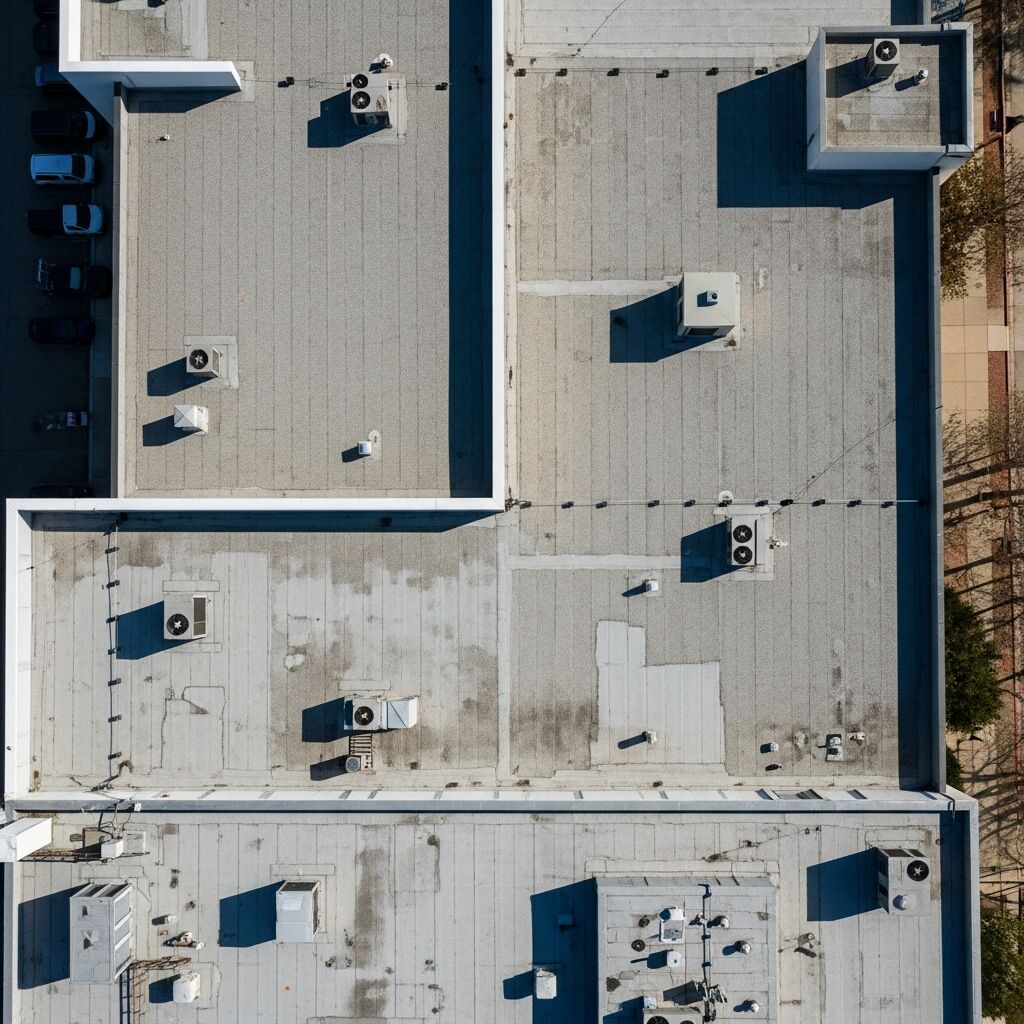
Modified Bitumen
Granulated Asphalt Membrane
An asphalt-based membrane, often applied in multiple plies, with a granulated surface available in several colors. A common choice on porches and smaller residential sections.
- Multi-ply options
- Granule color choices
- Handles moderate foot traffic
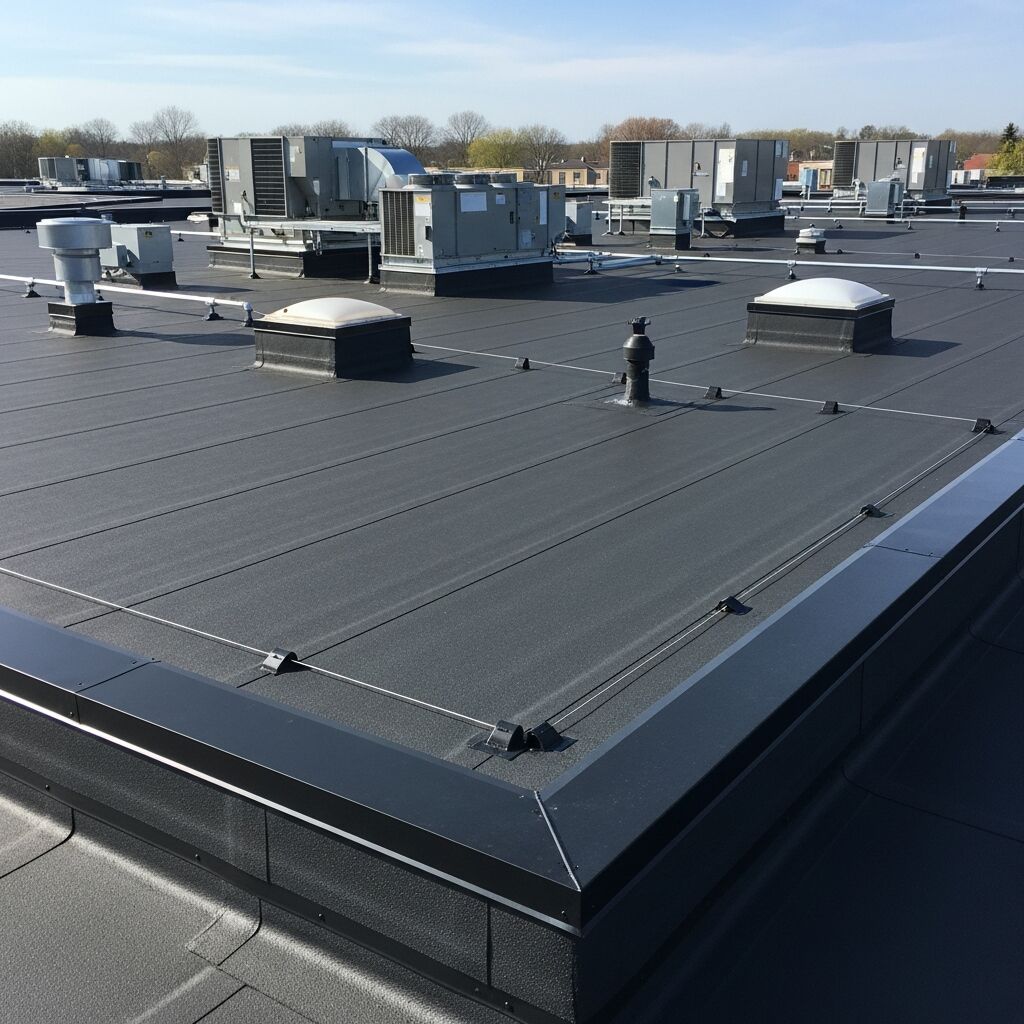
EPDM
Synthetic Rubber Membrane
A rubber membrane with a long history on low-slope roofs. Flexible in cold weather and often used on garages and simple roof shapes.
- Flexible in cold temperatures
- Large sheets, fewer seams
- Typically black surface
Quick Comparison
General characteristics only. Actual suitability and performance depend on the specific product, installation, and your roof's conditions.
Surface
- TPO
- Typically white or light gray
- Mod-Bit
- Granulated, several colors
- EPDM
- Typically black
Seams
- TPO
- Heat-welded
- Mod-Bit
- Torched, cold-applied, or self-adhered laps
- EPDM
- Adhered or taped
Reflectivity
- TPO
- High
- Mod-Bit
- Varies by granule color
- EPDM
- Lower (black)
Foot traffic
- TPO
- Good
- Mod-Bit
- Good
- EPDM
- Fair
Common residential use
- TPO
- Additions, garages
- Mod-Bit
- Porches, additions, garages
- EPDM
- Garages, additions
| Feature | TPO | Mod-Bit | EPDM |
|---|---|---|---|
| Surface | Typically white or light gray | Granulated, several colors | Typically black |
| Seams | Heat-welded | Torched, cold-applied, or self-adhered laps | Adhered or taped |
| Reflectivity | High | Varies by granule color | Lower (black) |
| Foot traffic | Good | Good | Fair |
| Common residential use | Additions, garages | Porches, additions, garages | Garages, additions |
No Guesswork, No Fake Numbers
What Affects a Residential Flat Roof Estimate?
A useful estimate starts with seeing the roof. These are the factors that shape the scope for a home:
Roof size
Small porch and garage roofs and larger addition roofs differ in material, setup, and labor.
Repair or replacement
A targeted repair and a full tear-off are very different scopes.
Existing layers
How many roofs are already on the structure affects tear-off and disposal.
Deck & insulation condition
Wet or damaged materials found during inspection must be addressed first.
Membrane selected
TPO, EPDM, and modified bitumen differ in material and installation method.
Drainage corrections
Tapered insulation, new edge metal, or gutter changes add to the scope when needed.
Wall & shingle transitions
Siding removal, counter-flashing, and tie-ins with pitched roofs add detail work.
Access
Second-story roofs, tight lots, and landscaping can affect setup and protection.
The only way to know what your roof needs is to inspect it. We check the membrane, slope, drainage, wall and shingle transitions, and the deck where accessible, then provide a written estimate.
FAQ
Residential Flat Roofing Questions
Can I put shingles on my low-slope roof?
Asphalt shingles are designed for pitched roofs and rely on gravity to shed water. Below the minimum slope set by the shingle manufacturer and local code, shingles are generally not an appropriate choice. A low-slope or flat section usually needs a membrane system instead. We measure the slope during the inspection.
Which membrane is best for my home?
There is no single answer. TPO, EPDM, and modified bitumen each have strengths, and the right choice depends on the roof's slope, size, how it connects to walls and shingled sections, drainage, access, and the existing roof. We recommend a system after we inspect the roof, not before.
Should I repair or replace my flat roof?
If the leak is isolated and the membrane, insulation, and deck are otherwise sound, a repair may be reasonable. If there are recurring leaks, widespread wear, or wet materials underneath, replacement is often the more sensible option. We explain what we find and give you both options in writing when both make sense.
Why does water pond on my flat roof?
Ponding can come from sagging or uneven decking, blocked drainage, edge metal that dams water, or a roof that was built with too little slope. Correcting it may involve drainage changes or tapered insulation, which we assess during the inspection.
My leak is where the porch roof meets the house. What causes that?
Roof-to-wall transitions are among the most common leak points on residential low-slope roofs. Missing or failed step flashing, counter-flashing, or a membrane that was not turned up the wall far enough are typical causes. Sometimes siding must be opened to correct it properly.
How much will my flat roof cost?
We do not publish prices because the cost depends on the factors listed above, most of which require seeing the roof. After the inspection, we provide a written estimate for your specific roof.
How long will a new flat roof last?
Service life depends on the membrane, installation conditions, drainage, climate exposure, and maintenance. We will discuss realistic expectations and applicable manufacturer and workmanship warranty terms for your specific roof in the written estimate.
Let Us Look at Your Roof For Free
We'll inspect the low-slope section, explain what we find, and give you a written estimate with no pressure.
SCHEDULE MY FREE INSPECTION